Stock is one of a cook's most valuable ingredients. White veal stock has a neutral flavor, which is important when making delicately-flavored sauces or stews.
Steps
1
Preparing and Cooking the Bones
Ingredients
6 lb veal bones
4 to 5 L/qt cold water
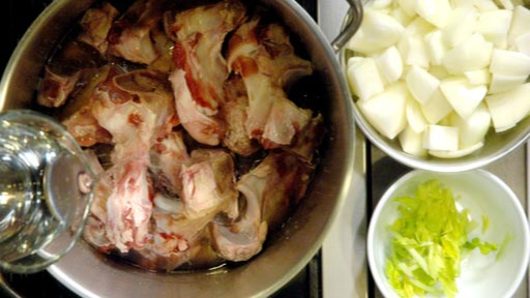
To prepare the bones, rinse under cold water and add to a 10 to 12 L/qt stock pot. Fill with enough cold water to cover the bones by at least two inches.
Gently bring to a simmer, skimming the impurities as they rise to the surface. This should take about 30 minutes or so.
2
Preparing and Adding the Mirepoix
Ingredients
3 large onions (approx. 1 lb)
2 leeks (white part only)
4 ribs celery (approx. 1/2 lb)
1 head garlic
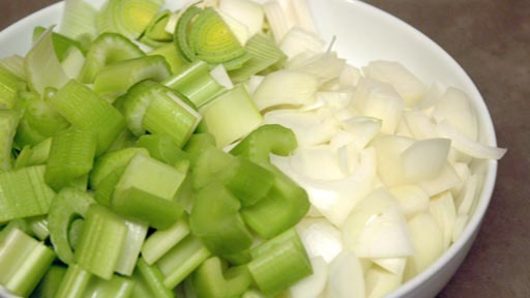
Wash and roughly chop the onions, leeks and celery, into 1" to 2" -inch pieces. Cut the garlic in half horizontally.
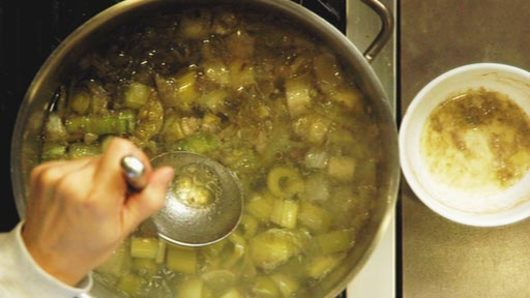
Once most of the impurities have been removed from the surface of the stock, add the mirepoix. Continue to simmer for 8 to 10 hours.
3
Simmering and Skimming the Stock
As the stock simmers, remember to skim off any fat and impurities as they rise to the surface.
4
Adding the Bouquet Garni
Ingredients
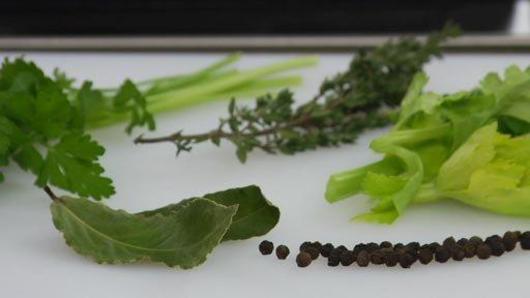
4 to 5 sprigs fresh thyme
1/4 bunch parsley stems
2 bay leaves
1 tsp black peppercorns
About 30 minutes before the stock has finished cooking, add the bouquet garni.
5
Straining, Cooling and Storing the Stock
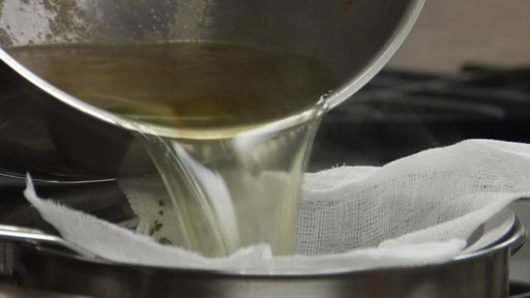
Once the stock has finished cooking, strain and properly cool it. Store the stock in the refrigerator for a few days or freeze for several months.
9 Comments
Richard H•
i let cool over night then remove fat from top and save to make roux for other sauces
I can't believe I missed that. It really pays to watch these videos over and over. I learn something new every time. I'll go watch these again and see if I missed anything else.
Thanks again.
Any bones can be used to make a stock, but the flavors of veal vs. pork vs. lamb bones will each be unique. It's up to you and what you prefer (or what you have on hand). Enjoy!
The time difference has to do with the time it takes to extract and develop the flavor of each respective key ingredient - in this case, the bones. The veal bones are very dense, thick and heavy with significant connective tissue. Chicken bones are much lighter and more delicate, with more surface area for extraction and penetration. I hope this helps!
I made this stock using beef bones (not veal). I simmered my stock for the full 10 hours and the final product (the following day, post overnight refrigeration), was a beautiful, extremely gelatinous stock. Looking forward to using this stock in the coming months!